
We have already spent quite a bit of time working through the definition of the maximum active power (Pmax) of a Power Generating Module (PGM), but there is another quantity that causes even more serious interpretation issues—namely maximum reactive power (maximum reactive power), often denoted as Qmax (among others in national framework test programs and standards such as EN 50549, VDE-AR-N 4110 / 4120).
Problem 1: Maximum reactive power has no definition in the primary source document, i.e. Commission Regulation (EU) 2016/631 (NC RfG), yet it is referenced there in seven (7) places in the context of the PGM’s capability to generate reactive power.
Problem 2: Maximum reactive power (Qmax) remains in a relationship with maximum active power (Pmax) that depends on the PGM loading profile: Qmax ~ P–Q / Pmax. Therefore, Qmax does not have to be constant, and understanding what Qmax is requires understanding what Pmax is.
Problem 3: Because the PGM maximum power (Pmax) must be defined in the context of ensuring the required capabilities at Pmax, treating Qmax as secondary to Pmax makes no sense due to the U–Q/Pmax and P–Q/Pmax requirements for P = Pmax.
At this point it may look even more tangled than before, but that is not a problem—we will cut through this Gordian knot somehow. Let us start by throwing away the power engineers’ intuition that if a quantity is called “maximum” then it is… maximum. That is the first hidden trap, because every engineer likes to cling to the generator’s technical documentation (“RTFM!”), while the RfG code turns the order upside down by introducing the perspective of operational extremes in place of the well-known and beloved technical extremes. Attempts to link these two perspectives—visible in Grid Operation & Maintenance Instructions—lead astray, but St. Maximilian Maria Kolbe must guard tradition. The unfortunate consequence is an inflation of all sorts of “powers” in order to “somehow” harmonize the “good old gross times” with “youthful net expectations”.
The code, however, says that technology agnosticism should be applied, so we return to the point: operational extremes—what are these oddities? NC RfG regulates the relationship between the Owner of the Power Generating Facility (the Generator Owner) and the System Operator responsible for the point(s) of connection of that facility. In short: based on the RfG code, the Operator specifies which requirements a PGM must meet, and the Generator Owner must demonstrate that the PGM meets those requirements within a defined operating scope. The key point is that this scope can be defined unambiguously only in the compliance verification process—i.e., verified by measurements and, if needed, corrected.
But what is the operating scope?
It is a defined area of the theoretical net P–Q characteristic of the entire PGM (Fig. 1a), within which the PGM can operate continuously and safely (taking into account the technical limits of the power export system), providing at least the required capabilities for specified ranges of net active power generation and net reactive power generation and absorption (i.e., with respect to the point of connection).
To simplify the analysis for a moment, let us assume that the required P–Q/Pmax profile is described by the following points (generator sign convention / GSC / generation > 0):
Q absorption:
P/Pmax = 0; Q/Pmax = −0.45
P/Pmax = 1; Q/Pmax = −0.45Q generation:
P/Pmax = 0; Q/Pmax = +0.45
P/Pmax = 1; Q/Pmax = +0.45
Illustratively, it looks roughly like this:
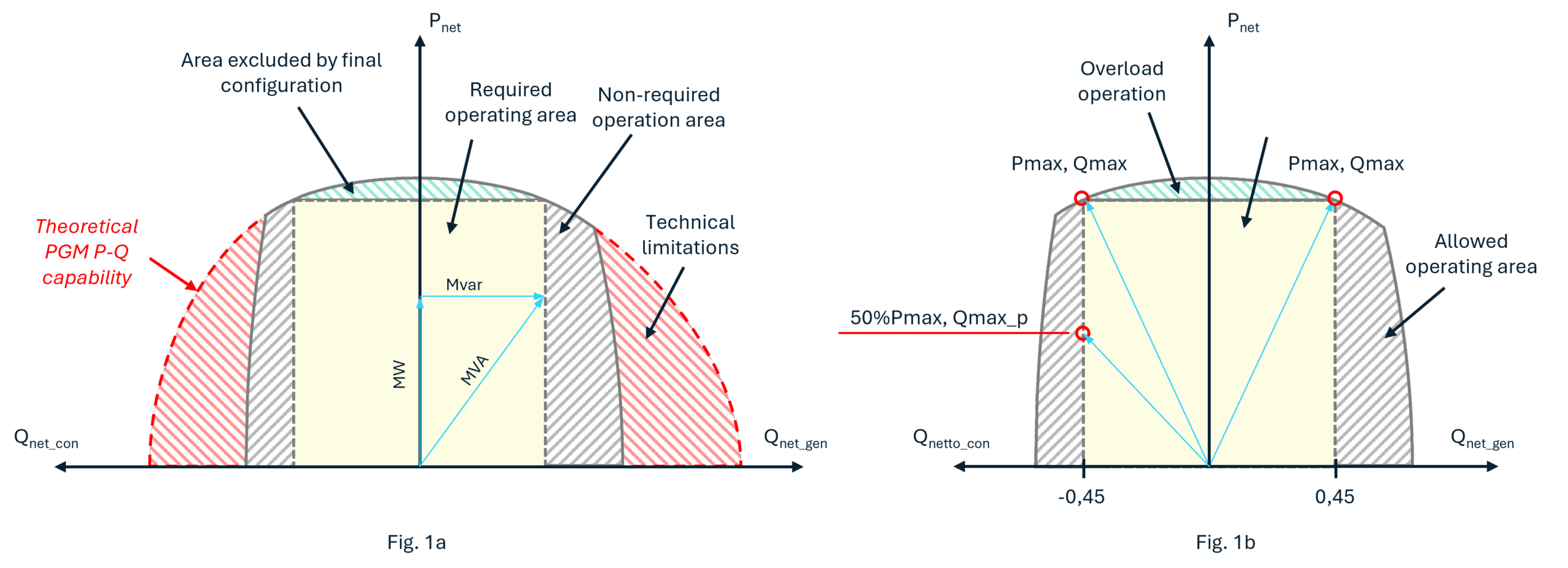
Fig. 1a – Separation of operating areas from the theoretical P–Q characteristic of the PGM
Fig. 1b – Area imposed by the requirement within the achievable (permissible) operating area
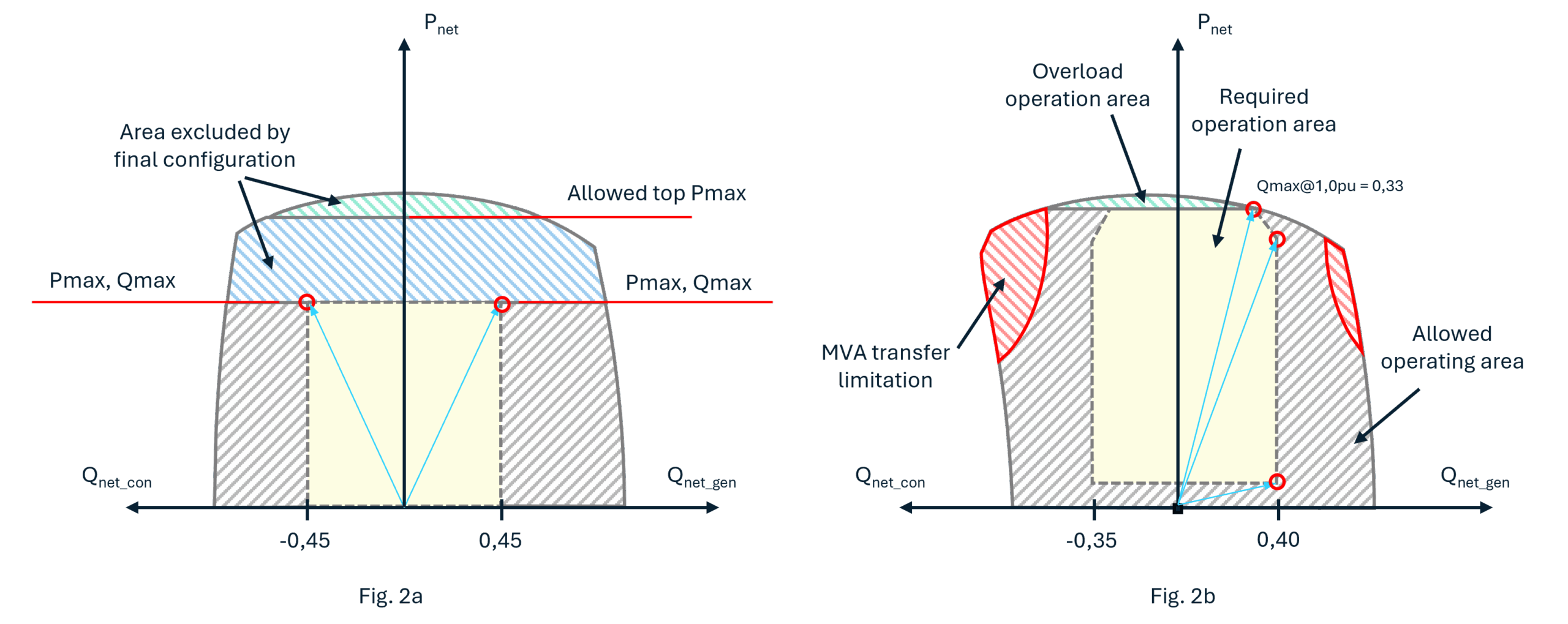
Fig. 2a – Scaling the requirement to Pmax below the theoretical achievable net power (e.g., net export limit)
Fig. 2b – Example PGM–PPM characteristic for an asymmetric P–Q/Pmax requirement before parameterization
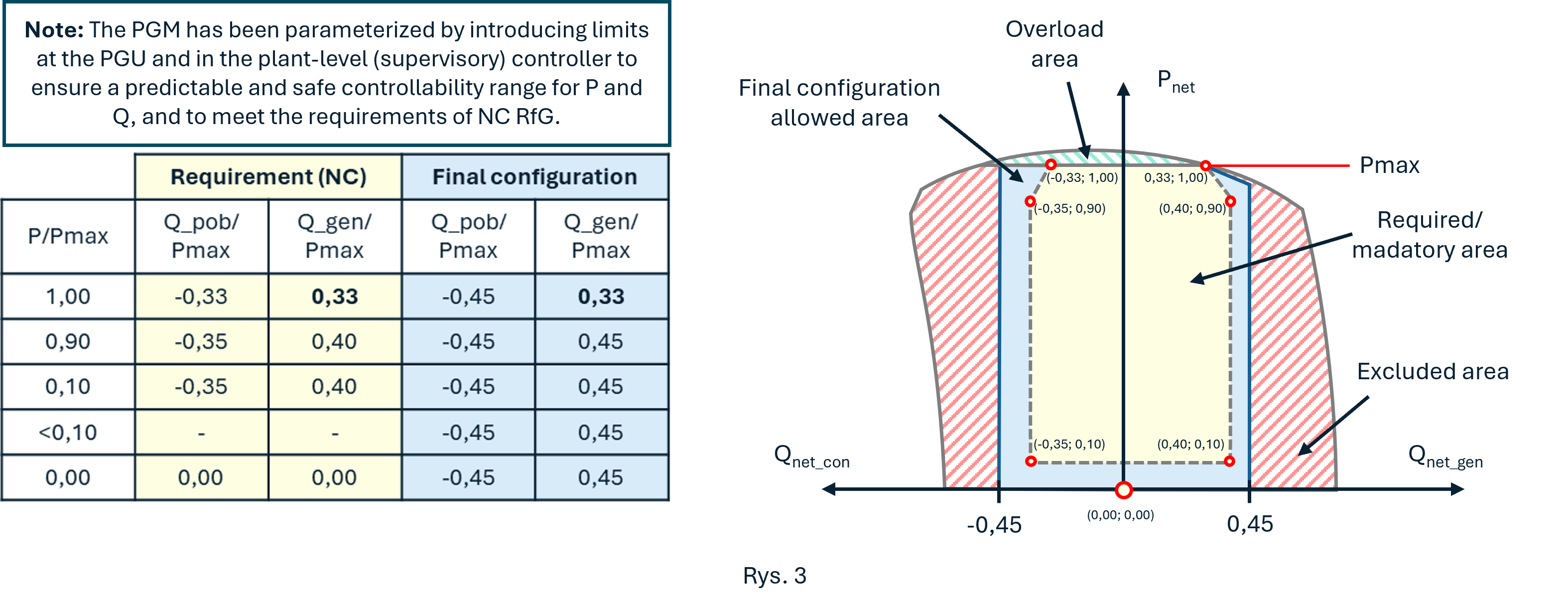
Fig. 3 – Target parameterization of an example PGM–PPM ensuring margins relative to the P–Q/Pmax requirement
Summary (bullet points):
- The PGM must provide the required capabilities jointly (i.e., Q at Pmax and below Pmax).
- To describe the operating area, one quantity is sufficient: Pmax (via P/Pmax).
- Qmax corresponds to the maximum required capability in the directions of generation and absorption—i.e., it results from the required P–Q/Pmax profile and may vary for different loading levels P/Pmax (Fig. 2b, Fig. 3).
- There exists an operating scope associated with the P–Q area for which at least the required capabilities are ensured (Fig. 1a and 1b).
- The required P–Q/Pmax profile scales to Pmax, meaning that there exists a level of net active power below which requirements will be met—this level defines the highest permissible Pmax (and Pmax may be lower—Fig. 2a).
- Qmax works in association with Pmax; Pmax and Qmax do not follow directly from the technical capabilities of devices and installations forming the PGM. Achievable net powers (P and Q) may theoretically be higher than the adopted operational limits.
- Full technical capability to generate active and/or reactive power is not, by itself, a “feature” of the PGM: the Owner of the Power Generating Facility has the right to restrict the permissible operating area of the PGM during parameterization of the controllability ranges of P and Q, while preserving the required area (i.e., the area imposed by the requirement)—Fig. 3.
- The operational P–Q extremes resulting from Pmax constitute formal commitments that should be disclosed in continuous-type agreements (distribution or transmission), because by their nature they will be subject to updates (e.g., temporary Pmax limitation during grid reinforcement, Pmax change due to PGM modification—expansion/dismantling of part of the energy park, degradation/aging effects, etc.).
Qmax and Pmax form a key duo describing the minimum required operating scope of the PGM—the set of all required operating settings on the P–Q plane or in the P–Q–U volume. Note that reaching a setpoint on the P–Q plane may also require availability of primary energy; however, this should not affect the choice of any setpoint. In such a case, it will be treated as an active limit on active power (more rarely, reactive power).
[1] Commission Regulation (EU) 2016/631 of 14 April 2016 establishing a network code on requirements for grid connection of generators (Text with EEA relevance)